Autonomy first
As latency increases, spacecraft must make more navigation and safety decisions without continuous ground intervention.
VYOR is developing the low-cost autonomous prospecting and material-acquisition stack required to characterize and exploit small Solar System bodies.
Mining is not the first mission. Reliable characterization is.
Our roadmap begins with the capabilities that survive every later phase: autonomous target acquisition, optical navigation, spectral sensing, onboard decision-making, deep-space communications, proximity operations and controlled interaction with low-gravity surfaces.
The company is built around turning one-off exploration capabilities into a compact, repeatable commercial stack for small-body missions.
As latency increases, spacecraft must make more navigation and safety decisions without continuous ground intervention.
Remote sensing reduces uncertainty before expensive contact, excavation and processing hardware is committed.
Every early mission should retire a failure mode that appears again on the eventual resource mission.
Buy commodity spacecraft hardware early. Own the autonomy, sensing, mission software and acquisition architecture.
The early company is not a refinery in space. It is the enabling layer that makes characterization and controlled interaction inexpensive enough to repeat.
Optical target acquisition, relative navigation, autonomous approach, safe-mode logic and fault-aware planning.
Compact visible and near-infrared sensing designed to classify candidate materials and map compositional variation before contact.
High-reliability avionics, power, propulsion, communications and operations built around small-body missions rather than generic LEO duty cycles.
Low-reaction-force contact, capture and excavation concepts designed for environments where the tool can push the spacecraft away from the surface.
A staged program from bench testing to asteroid interaction. Dates are planning targets, not claims. Each phase is designed to retire a specific class of risk.
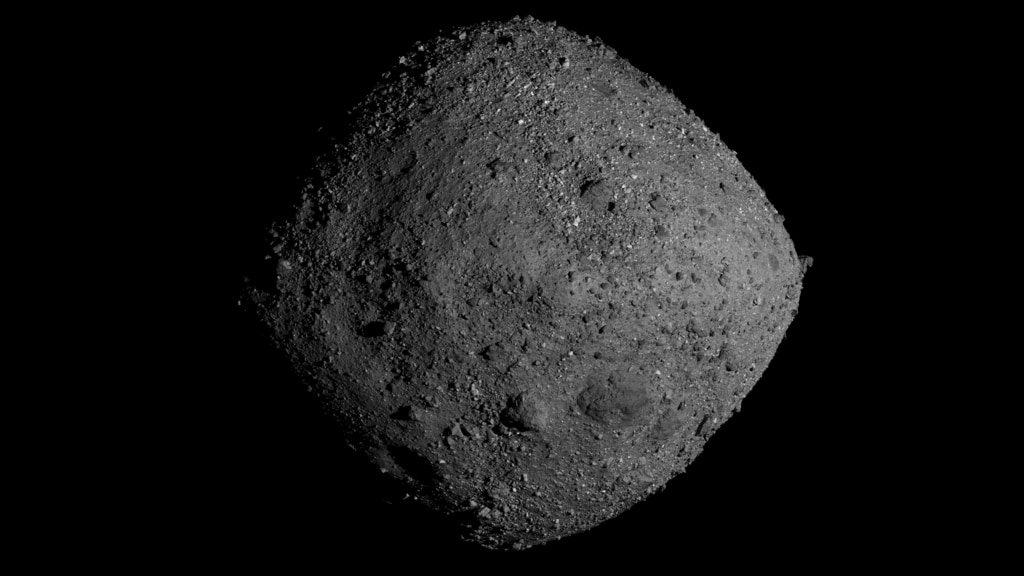
Target-selection database, autonomous tracking, spectral breadboard, systems engineering, regulatory strategy and first low-gravity acquisition tests.
Hosted orbital payload proving sensing, calibration, autonomous target acquisition, onboard processing and reliable space-to-ground operations.
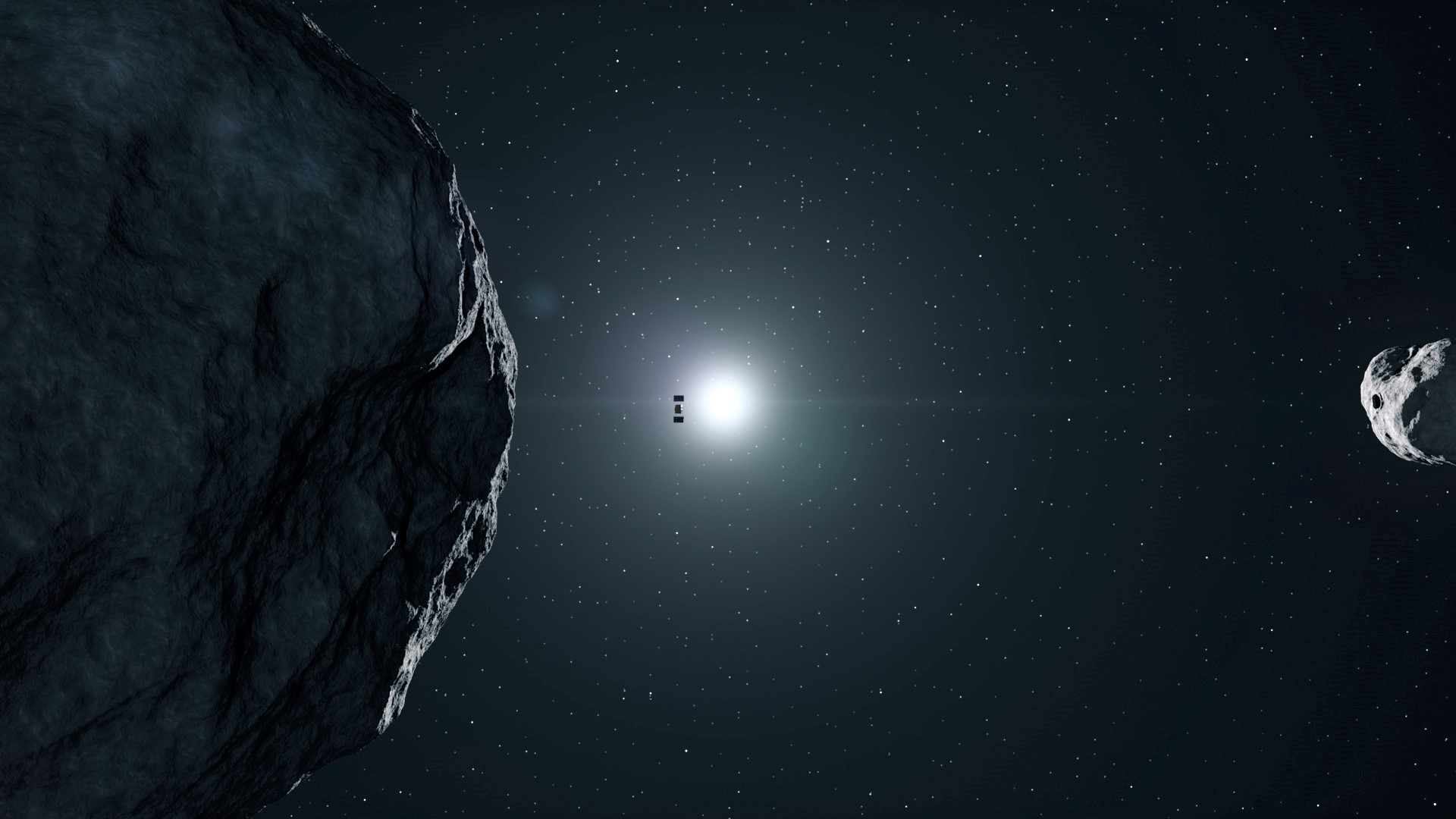
Flyby first, then rendezvous: deep-space communications, long-duration reliability, optical navigation, close characterization, resource mapping and proximity operations.
Mission design, target database, sensing breadboards, autonomy software, systems engineering and funding/regulatory groundwork.
Prove the differentiated payload and autonomy stack in orbit before taking responsibility for the entire spacecraft bus.
Integrate propulsion, precision ADCS, safe modes and more autonomous operations into a spacecraft controlled end to end.
Demonstrate deep-space communications, optical navigation, long-duration operations and remote spectral characterization.
Match velocity, map shape and spin, characterize surface properties and identify candidate interaction sites.
Demonstrate surface interaction and kg-scale capture while measuring reaction forces, dust behavior and material properties.
Select the extraction chain after ground truth exists. Prove processing at kilograms before committing to industrial-scale transport or refining.
NASA, JAXA and ESA missions demonstrate the sequence: find, approach, map, touch, sample and operate around small bodies. The commercial problem is to compress mission cost, time and operational complexity.
A reference architecture for turning remote observations into site selection, physical contact and sample return.

Multiple surface interactions and returned samples provide ground truth for what remote sensing can and cannot tell us.
Autonomy, close characterization and CubeSat-enabled investigation around a binary asteroid system.
Mission imagery is presented as technical heritage and context. VYOR is independent and is not affiliated with or endorsed by NASA, ESA, JAXA, DLR or their mission partners. Before commercial publication, re-check each source licence and retain the detailed attribution file.
We are at the research and architecture stage. We are interested in conversations with spacecraft engineers, GNC researchers, planetary scientists, spectroscopy teams, low-gravity robotics groups and early deep-tech partners.
Start a conversation ↗Configure the final VYOR email address after securing the company domain.